Choosing a Sonos soundbar involves matching the model to your room size, TV, and desired audio experience. The Sonos Arc is ideal for large rooms and TVs 55 inches or larger, offering premium Dolby Atmos with eleven drivers. The Sonos Beam (Gen 2) suits most users with TVs under 55 inches, providing virtual Dolby Atmos and smart features. The Sonos Ray is the most affordable option, best for smaller rooms or secondary TVs, focusing on clear dialogue via an Optical connection.
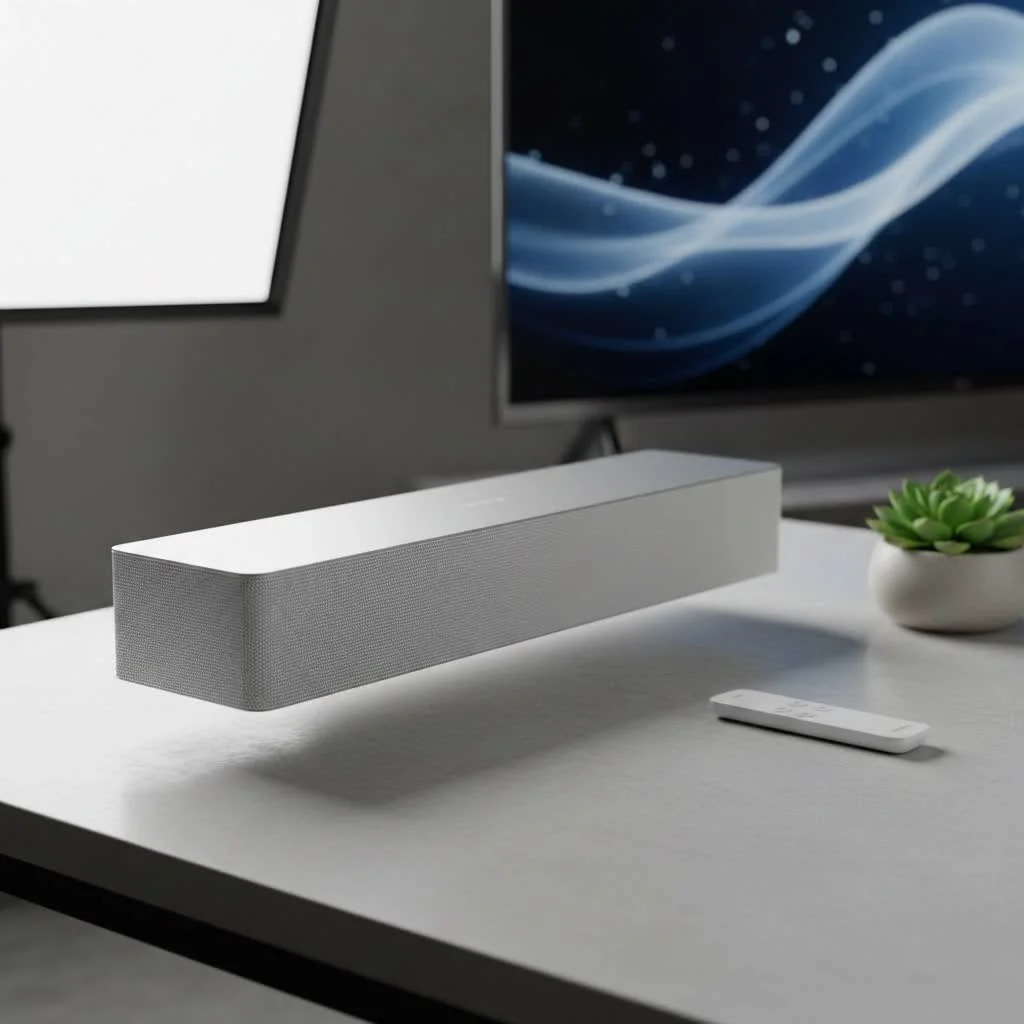
This guide will break down the entire Sonos soundbar lineup, helping you find the perfect match for your room, your television, and your budget. For see our home theater recommendations on this site.
Why Choose a Sonos Soundbar?
Before we dive into the specific models, let’s talk about the “Sonos secret sauce.” What makes millions of users loyal to the brand?
- Exceptional Sound Quality: Sonos invests heavily in acoustics. Their soundbars deliver rich, balanced, and room-filling sound right out of the box.
- The Sonos Ecosystem: A Sonos soundbar is just the beginning. You can effortlessly add a wireless subwoofer for deeper bass or a pair of rear speakers for true surround sound. Plus, you can group it with other Sonos speakers throughout your home for multi-room music.
- Simple Setup and Control: Setting up a Sonos soundbar takes minutes using the intuitive Sonos app. The app becomes your central command for everything, from adjusting EQ to streaming music from services like Spotify and Apple Music.
- Smart Features: With built-in support for Amazon Alexa and Google Assistant on select models, you can control your TV, manage your music, and get answers with just your voice.
Meet the Sonos Soundbar Family
Sonos currently offers three core soundbars, each designed for a different type of user and space.
Sonos Arc: The Premium Dolby Atmos Powerhouse
The Sonos Arc is the flagship model, designed for those who want the most immersive home theater experience possible. It’s a large soundbar best suited for TVs 55 inches and larger.
The Arc’s main selling point is its stunning delivery of Dolby Atmos. It features eleven high-performance drivers, including upward-firing ones that bounce sound off your ceiling to create a true sense of height and a three-dimensional soundscape. Watching a movie with Dolby Atmos on the Arc is transformative; you’ll hear rain falling from above and spaceships flying overhead.
Who is the Sonos Arc for?
- Home theater enthusiasts with large TVs (55-inch and up).
- Anyone who wants the best possible Dolby Atmos experience from a soundbar.
- Users planning to build a full surround sound system with a Sub and rear speakers.
“As an audio professional, I’m consistently impressed by the Arc’s ability to create a wide, immersive soundstage,” says audio expert Alex Carter. “It convincingly places sounds around the room in a way that few other standalone soundbars can achieve.”
Sonos Beam (Gen 2): The Smart, Compact All-Rounder
|
Our Picks for the Best Sound Bar in 2026
As an Amazon Associate I earn from qualifying purchases.
|
||
| Num | Product | Action |
|---|---|---|
| 1 | Sound Bar for Smart TV, 80W Soundbar with Bluetooth/ARC/Opt/AUX Connect, Auto Volume Boost, 3 Equalizer Modes, 2 in 1 Detachable Soundbar for TV/PC/Gaming/Projectors |

|
| 2 | Sonos Beam Gen 2 - Black - Soundbar with Dolby Atmos |
|
| 3 | Sound Bar for Smart TV, 80W Soundbar with Bluetooth/ARC/Opt/AUX Connect, Auto Volume Boost, 3 Equalizer Modes, 2 in 1 Detachable Soundbar for TV/PC/Gaming/Projectors |
|
| 4 | Sonos Beam Gen 2 - White - Soundbar with Dolby Atmos |
|
| 5 | VIZIO V-Series 2.0 Compact Sound Bar with Dolby Audio, DTS:X, Bluetooth V20x-J8 |
|
| 6 | ULTIMEA 5.1CH Surround Sound Bar with Subwoofer, Dolby Atmos, VoiceMX, BassMX, APP, 300W Soundbar for Smart TV, Home Theater Surround Sound System for TV, BT 5.4, Poseidon M60 (2025 Model) |
|
| 7 | MZEIBO Sound Bar with Subwoofer,120W Soundbar for Smart TV Surround Sound Home Theater System Bluetooth 5.3 Audio Compatible with ARC, AUX, Optical |
|
| 8 | Samsung HW-C450 2.1ch Soundbar w/DTS Virtual X, Subwoofer Included, Bass Boost, Adaptive Sound Lite, Game Mode, Bluetooth, Wireless Surround Sound Compatible |
|
| 9 | Sony S100F 2.0ch Soundbar with Bass Reflex Speaker, Integrated Tweeter and Bluetooth, (HTS100F), easy setup, compact, home office use with clear sound black |
|
| 10 | Sound Bar for Smart TV, 80W Soundbar with Bluetooth/ARC/Opt/AUX Connect, Dynamic Volume Boost, 3 Equalizer Modes, 2 in 1 Detachable Soundbar for TV/PC/Gaming/Projectors |
|
The Sonos Beam (Gen 2) is the sweet spot in the lineup for most people. It’s compact enough to fit in smaller or medium-sized rooms without sacrificing powerful, detailed sound. Its biggest trick is delivering a virtual Dolby Atmos experience without dedicated up-firing speakers.
Using advanced psychoacoustic techniques, the Beam creates an impressive sense of height and space that punches well above its weight class. It’s an incredibly versatile speaker that excels with movies, TV shows, and music. It also includes built-in voice assistants, making it a smart hub for your living room.
Who is the Sonos Beam (Gen 2) for?
- Most users with TVs under 55 inches.
- People living in apartments or medium-sized living rooms.
- Those who want a great balance of performance, features, and price.
Sonos Ray: The Essential Sound Upgrade
The Sonos Ray is the most affordable and compact entry into the Sonos ecosystem. It’s designed for a simple purpose: to be a massive upgrade over your TV’s built-in speakers. It focuses on delivering crisp, clear dialogue and fuller sound for everyday watching.
While the Ray doesn’t support Dolby Atmos, it provides a surprisingly wide soundstage for its size. It connects to your TV via an Optical cable, making it compatible with almost any television. If you have a smaller TV in a bedroom or office, or if you simply want better audio without the complexity, the Ray is an outstanding choice.
Who is the Sonos Ray for?
- Budget-conscious buyers seeking their first soundbar.
- Users with smaller TVs or in secondary rooms like bedrooms or dens.
- Anyone whose primary goal is to improve dialogue clarity.
Feature Comparison: Arc vs. Beam vs. Ray
| Feature | Sonos Arc | Sonos Beam (Gen 2) | Sonos Ray |
|---|---|---|---|
| Best For | Ultimate Home Theater | All-Around Performance | Essential TV Upgrade |
| Dolby Atmos | Yes (with up-firing drivers) | Yes (Virtual) | No |
| Drivers | 11 | 5 | 4 |
| TV Connection | HDMI eARC | HDMI eARC | Optical |
| Voice Assistant | Yes | Yes | No |
| Ideal TV Size | 55 inches + | Up to 55 inches | Any |
| Width | 45 inches | 25.6 inches | 22 inches |
Expanding Your Sonos Sound System
One of the best things about getting a Sonos soundbar is the potential for growth. When you’re ready, you can dramatically enhance your experience by adding two key components:
- Sonos Sub (or Sub Mini): Adding a wireless subwoofer takes all the low-end bass responsibility off the soundbar. This allows the soundbar to focus on mid-range and high frequencies, resulting in clearer dialogue and more detailed sound. The bass from a Sub provides the cinematic rumble and impact that brings action movies and music to life.
- Rear Surround Speakers: For the ultimate immersive experience, you can add a pair of Sonos speakers (like the Era 100 or Era 300) to act as dedicated rear channels. This creates a true surround sound environment where you’re placed in the middle of the action.
Frequently Asked Questions (FAQ)
Do Sonos soundbars work with any TV?Mostly, yes. The Arc and Beam (Gen 2) require a TV with an HDMI ARC or eARC port for the best experience, which is standard on most modern TVs. The Ray uses an Optical port, making it compatible with virtually any TV that has one.
Do I need a subwoofer with my Sonos soundbar?You don’t need one, as all Sonos soundbars are designed to sound great on their own. However, adding a Sonos Sub or Sub Mini makes a significant improvement by adding deep, rich bass that you can feel, creating a more complete and cinematic sound.
Is the Sonos Arc worth the money?If you have a large TV and are passionate about getting the best possible Dolby Atmos home theater sound from a soundbar, the Arc is absolutely worth it. It delivers an immersive experience that rivals more complex systems. For smaller spaces or those on a tighter budget, the Beam (Gen 2) offers a better value.
Can Sonos soundbars play music?Absolutely! This is a key strength of the Sonos ecosystem. You can stream music, podcasts, and audiobooks from all major services directly to your soundbar using the Sonos app, Apple AirPlay 2, or Spotify Connect. They are fantastic music systems when the TV is off.
What is Sonos Trueplay?Trueplay is Sonos’s proprietary room-tuning technology. Using the microphone on an iOS device, it analyzes how sound reflects off the walls, furniture, and other surfaces in your room. It then fine-tunes the soundbar’s output to ensure it sounds perfectly balanced, no matter where you’ve placed it.
The Final Verdict
Choosing the right Sonos soundbar comes down to understanding your space, your needs, and your ambitions for your home audio setup.
If you demand the absolute best in cinematic, immersive sound for a large room, the Sonos Arc is your undisputed champion. If you’re looking for the perfect blend of performance, compact size, and smart features for most living rooms, the Sonos Beam (Gen 2) is the ideal choice. And if you want a simple, affordable, yet powerful upgrade for clearer dialogue and more enjoyable TV viewing, the Sonos Ray is the perfect starting point.
No matter which you choose, you’re not just buying a speaker; you’re investing in a world of incredible sound that can grow with you for years to come.
Frequently Asked Questions
Do Sonos soundbars work with any television model?
Most Sonos soundbars are compatible with modern TVs. The Arc and Beam (Gen 2) require an HDMI ARC or eARC port, which is standard on most newer televisions. The Sonos Ray connects via an Optical port, ensuring compatibility with virtually any TV that has one.
Is a separate subwoofer necessary for a Sonos soundbar?
A subwoofer is not strictly necessary, as all Sonos soundbars deliver excellent standalone audio. However, adding a Sonos Sub or Sub Mini significantly enhances the experience by providing deep, rich bass, which creates a more cinematic and impactful sound for movies and music.
Is the Sonos Arc a worthwhile investment for home theater enthusiasts?
Yes, the Sonos Arc is absolutely worth the investment for home theater enthusiasts with large TVs (55 inches and up) who prioritize the best possible Dolby Atmos sound. It delivers an immersive, three-dimensional audio experience that rivals more complex multi-speaker systems.
Can Sonos soundbars be used for playing music?
Yes, Sonos soundbars are excellent for playing music. They integrate seamlessly into the Sonos ecosystem, allowing users to stream music, podcasts, and audiobooks from major services directly through the Sonos app, Apple AirPlay 2, or Spotify Connect, even when the TV is off.
What is Sonos Trueplay and how does it improve sound?
Sonos Trueplay is a proprietary room-tuning technology that optimizes soundbar performance. Using an iOS device's microphone, it analyzes how sound interacts with your room's acoustics, then fine-tunes the soundbar's output to ensure perfectly balanced audio regardless of placement.
Get our weekly buyer guide
Practical specs, not advice. Unsubscribe anytime.

I’ve been a Sonos fan for years, and their sound quality is truly exceptional. I upgraded my old soundbar to the Arc, and the difference is night and day. The eleven drivers really make a difference in how detailed and rich the audio is. It’s a premium product, but absolutely worth it for the experience.
I got the Sonos Ray for my office, mostly for clearer dialogue during shows and podcasts. It definitely delivers on that front, and the optical connection was simple enough. My only minor complaint is that it doesn’t have as much bass as I hoped, even for a smaller unit. It’s good for the price, but don’t expect a huge cinematic boom.
I finally pulled the trigger on the Sonos Arc after reading up on it, and wow, what a difference! My living room is pretty big, and my TV is a 65-inch, so I needed something that could really fill the space. The Dolby Atmos is incredible, and the soundstage is just massive. Movies feel so much more immersive now.
The Sonos Beam (Gen 2) was exactly what I needed for my bedroom setup. My TV is only 50 inches, so the Arc would have been overkill. The virtual Dolby Atmos is surprisingly good for its size, and I love the smart features for controlling music. Setup was a breeze, as expected with Sonos.