Ever wondered how to truly elevate your home audio without a cluttered setup? You’ve likely heard of sound bars, but within that world lies a distinction that can make all the difference for serious listeners: the passive sound bar. Far from a simple plug-and-play gadget, a passive sound bar is the cornerstone of a sophisticated home theater, offering unparalleled sound quality and customization. If you’re ready to dive deeper than basic TV audio and build a truly immersive sound experience, understanding the power of a passive sound bar is your next essential step.
What Exactly is a Passive Sound Bar?
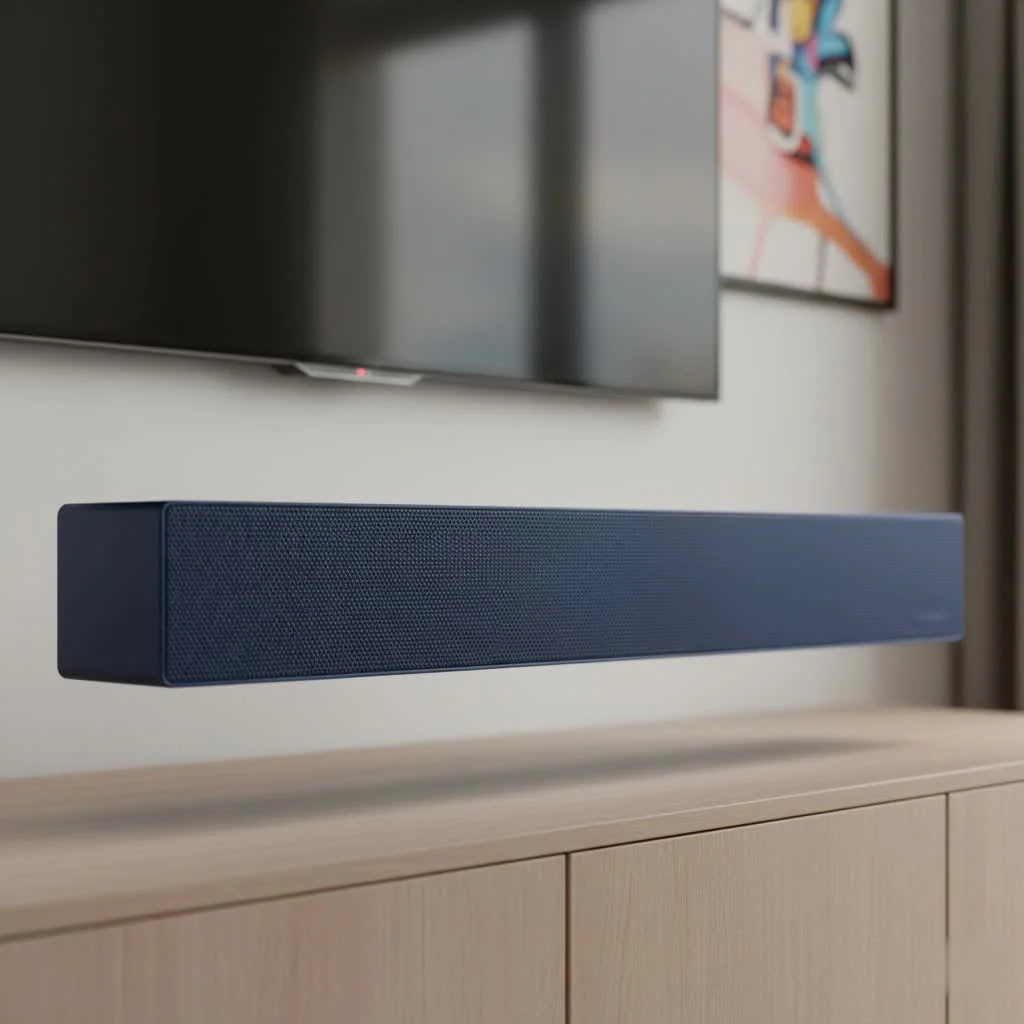
Imagine a high-performance speaker system, but neatly packaged into a sleek, horizontal bar. That’s essentially a passive sound bar. Unlike its more common “active” counterpart, a passive sound bar doesn’t come with its own built-in amplifier or audio processing. Think of it as a premium set of speakers, all bundled together, waiting to be paired with the right external power source.
So, how can you spot one? It’s usually quite simple. A passive sound bar will have traditional speaker terminals on its back, much like bookshelf or tower speakers, and you won’t find a power cord. Instead, it relies entirely on an external AV receiver or amplifier to do the heavy lifting – processing audio signals, providing the necessary power, and ultimately breathing life into the sound. This distinction is crucial, as it lays the foundation for a home theater setup that can truly sing.
Passive vs. Active Sound Bars: A Head-to-Head Battle
When you’re looking to upgrade your home audio, the choice often boils down to a passive or active sound bar. While both aim to enhance your listening experience, they achieve it through fundamentally different approaches.
Amplification: The Core Difference
Passive sound bars are, by design, unpowered. They are merely speaker arrays, meaning they absolutely require an external amplifier or AV receiver to function. This separate component provides the power to drive the speakers and handles all the audio processing, from decoding surround sound formats to adjusting equalization.
Active sound bars, on the other hand, are self-contained units. They come with built-in amplifiers and processing capabilities, making them a “plug-and-play” solution. You connect them directly to your TV or other sources, and they’re ready to go.
Sound Quality: Prioritizing Purity
If pristine audio quality is your top priority, a passive sound bar often holds the edge. Because it doesn’t house the amplification electronics, the manufacturer can dedicate more of the sound bar’s internal space and budget to higher-quality speaker drivers and crossover components. This separation also reduces the likelihood of internal interference, leading to a cleaner, more distortion-free audio output.
“From my two decades in audio engineering, I’ve seen countless trends come and go,” says Dr. Eleanor Vance, Lead Audio Engineer at Sonic Innovations. “But the enduring appeal of a passive sound bar lies in its fundamental principle: separating amplification from the speakers allows for a purity of sound and a level of control that active units simply can’t match. It’s about building an experience, not just buying a device.”
Active sound bars, while convenient, can sometimes compromise on sheer audio fidelity due to the integrated design and the need to fit all components into a compact chassis.
Customization and Future-Proofing
|
Our Picks for the Best Sound Bar in 2026
As an Amazon Associate I earn from qualifying purchases.
|
||
| Num | Product | Action |
|---|---|---|
| 1 | Sound Bar for Smart TV, 80W Soundbar with Bluetooth/ARC/Opt/AUX Connect, Auto Volume Boost, 3 Equalizer Modes, 2 in 1 Detachable Soundbar for TV/PC/Gaming/Projectors |

|
| 2 | Sonos Beam Gen 2 - Black - Soundbar with Dolby Atmos |
|
| 3 | Sound Bar for Smart TV, 80W Soundbar with Bluetooth/ARC/Opt/AUX Connect, Dynamic Volume Boost, 3 Equalizer Modes, 2 in 1 Detachable Soundbar for TV/PC/Gaming/Projectors |
|
| 4 | ULTIMEA 5.1CH Surround Sound Bar with Subwoofer, Dolby Atmos, VoiceMX, BassMX, APP, 300W Soundbar for Smart TV, Home Theater Surround Sound System for TV, BT 5.4, Poseidon M60 (2025 Model) |
|
| 5 | Sound Bar for Smart TV, 80W Soundbar with Bluetooth/ARC/Opt/AUX Connect, Auto Volume Boost, 3 Equalizer Modes, 2 in 1 Detachable Soundbar for TV/PC/Gaming/Projectors |
|
| 6 | VIZIO V-Series 2.0 Compact Sound Bar with Dolby Audio, DTS:X, Bluetooth V20x-J8 |
|
| 7 | MZEIBO Sound Bar with Subwoofer,120W Soundbar for Smart TV Surround Sound Home Theater System Bluetooth 5.3 Audio Compatible with ARC, AUX, Optical |
|
| 8 | Sony S100F 2.0ch Soundbar with Bass Reflex Speaker, Integrated Tweeter and Bluetooth, (HTS100F), easy setup, compact, home office use with clear sound black |
|
| 9 | Samsung HW-C450 2.1ch Soundbar w/DTS Virtual X, Subwoofer Included, Bass Boost, Adaptive Sound Lite, Game Mode, Bluetooth, Wireless Surround Sound Compatible |
|
| 10 | Sonos Beam Gen 2 - White - Soundbar with Dolby Atmos |
|
One of the most significant advantages of a passive sound bar is the freedom it offers. You get to choose the external amplifier or AV receiver that best suits your preferences, room size, and acoustic environment. This flexibility empowers you to fine-tune your audio experience precisely to your liking. Moreover, passive sound bars are inherently more “future-proof.” As technology evolves, you can upgrade individual components—like your receiver—without having to replace the entire sound bar system. This provides a cost-effective path to staying at the cutting edge of audio technology.
Active sound bars, being all-in-one solutions, typically offer limited customization. You’re often tied to the sound bar’s built-in processing and amplification, and upgrading usually means replacing the entire unit.
Setup Complexity and Cost
The “plug-and-play” nature of active sound bars makes them incredibly easy to set up. You connect a couple of cables, and you’re good to go. They also tend to have a lower upfront cost, as they don’t require additional equipment.
Passive sound bars, however, demand a bit more planning and effort. You’ll need to purchase a separate AV receiver or amplifier, and the wiring involves connecting speaker cables from the receiver to the sound bar’s terminals. This often translates to a higher initial investment when factoring in the cost of a quality receiver. However, for many audiophiles, the long-term benefits in performance and flexibility far outweigh the initial hurdles.
The Undeniable Advantages of Choosing a Passive Sound Bar
Why do seasoned audio enthusiasts often lean towards a passive sound bar? It boils down to a few compelling reasons that directly address the core of an immersive audio experience.
Superior Audio Performance: Cleaner, Distortion-Free Sound
By separating the amplification from the speaker drivers, passive sound bars minimize internal electronic interference, resulting in a significantly cleaner and more accurate audio reproduction. This design allows the speaker elements to focus solely on producing sound, leading to better dynamics, clearer dialogue, and a richer soundstage that active sound bars often struggle to match. The dedicated external amplifier can deliver more robust power, ensuring your speakers perform at their peak.
Unmatched Flexibility and Personalization: Tailor Your System
A passive sound bar offers an unparalleled degree of flexibility. You can pair it with an AV receiver that perfectly matches your desired power output, features (like advanced room correction), and budget. Want to expand to a full surround sound system later? No problem. Your passive sound bar can integrate seamlessly as your front Left, Center, and Right channels, with dedicated rear speakers and a subwoofer connected to your receiver. This level of personalization is simply not possible with most active sound bar systems.
Long-Term Value and Upgradability: Invest in Individual Components
While the initial investment for a passive sound bar setup (including the receiver) might be higher, it often proves more cost-effective in the long run. If a component fails or if you want to upgrade your receiver to support newer audio formats like Dolby Atmos or DTS:X, you can replace just that single component. Your high-quality passive sound bar can remain a cornerstone of your system for years, making it a sustainable and smart investment in your home entertainment.
Integration with Existing Systems: Seamless Addition to an AVR Setup
For those who already own an AV receiver or are looking to build a true home theater system, a passive sound bar is a natural fit. It integrates effortlessly, leveraging the receiver’s advanced capabilities for input switching, multi-channel processing, and comprehensive audio control. This allows for a unified and high-performance audio system where every component works in harmony.
Setting Up Your Passive Sound Bar: A Step-by-Step Guide
Setting up a passive sound bar might seem daunting at first, but it’s a straightforward process once you understand the components involved. Here’s how you can get your system up and running:
- Choose Your AV Receiver/Amplifier: This is the brain of your passive sound bar system. Select a receiver with enough channels (at least 3.1 for a basic sound bar setup, more if you plan for surround sound) and sufficient power output to drive your sound bar’s speakers.
- Placement is Key: Position your passive sound bar centrally beneath or above your TV for optimal sound imaging. Ensure it has enough clearance and is not obstructed by furniture or other objects.
- Connecting to an AV Receiver: This is where your speaker wire comes in.
- Identify the Left, Center, and Right speaker terminals on your passive sound bar.
- On your AV receiver, locate the corresponding Left (L), Center (C), and Right (R) speaker outputs.
- Using high-quality speaker wire (or banana plugs for easier connection), connect the positive (+) terminal on your sound bar’s left channel to the positive (+) terminal on the receiver’s left output. Do the same for the negative (-) terminals.
- Repeat this process for the Center and Right channels. Ensure all connections are secure and that positive goes to positive, and negative to negative, to avoid phase issues.
- Connecting Sources: Plug all your video and audio sources (Blu-ray player, gaming console, streaming box, etc.) directly into your AV receiver using HDMI cables. Then, connect a single HDMI cable from the receiver’s “HDMI Out” (preferably an ARC/eARC port if your TV supports it) to your TV. The receiver will manage all your inputs and send the video to the TV, and the audio to the sound bar.
- Initial Configuration: Power on your receiver and TV. Access your receiver’s on-screen display or menu. You’ll typically need to:
- Run the receiver’s automatic speaker calibration (if it has one). This uses a microphone to measure your room acoustics and optimize sound settings.
- Manually set your speaker configuration to reflect your passive sound bar setup (e.g., 3.0 or 3.1 if you add a subwoofer).
- Adjust speaker levels and distances as needed for balanced sound.
- Fine-Tuning: Play some of your favorite content and listen critically. You may want to make minor adjustments to bass, treble, or individual speaker levels through your receiver’s settings to perfectly suit your preferences.
Is a Passive Sound Bar Right for You?
Choosing a passive sound bar is a deliberate decision, typically made by those who prioritize performance and long-term flexibility over ultimate simplicity.
So, who benefits most?
- Audiophiles and Home Theater Enthusiasts: If you crave the best possible sound quality from a sound bar form factor, and appreciate the nuances of a high-fidelity system, a passive sound bar connected to a quality receiver is often the superior choice.
- Those with Existing AV Receivers: If you already own an AV receiver that you love, a passive sound bar can be a perfect way to integrate a sleek front-stage solution without sacrificing your receiver’s capabilities.
- Users Seeking Customization and Upgradability: If you envision building a system that can evolve with your needs and technology, allowing you to upgrade components independently, the passive route offers unmatched freedom.
- Individuals Who Value Aesthetics but Demand Performance: A passive sound bar offers a minimalist look while providing the power and clarity usually associated with larger, more complex speaker setups.
However, if a truly “set it and forget it” experience is what you’re after, and budget is the absolute primary concern, an active sound bar might be a more convenient entry point into improved TV audio. But for those ready to invest a little more thought and effort, the rewards of a passive sound bar are truly transformative.
Frequently Asked Questions
Do passive sound bars need a receiver?
Yes, absolutely. A passive sound bar does not have a built-in amplifier, so it relies on an external AV receiver or amplifier to power its speakers and process audio signals. This is a fundamental difference between passive and active sound bars.
Can I use a passive sound bar with any amplifier?
Generally, yes, as long as the amplifier or AV receiver has speaker outputs for the appropriate channels (Left, Center, Right) and is rated to deliver sufficient power that matches the impedance and power handling of your passive sound bar. Matching these specifications ensures optimal performance and prevents damage.
Are passive sound bars better than active ones?
“Better” is subjective and depends on your priorities. Passive sound bars generally offer superior sound quality, greater customization, and better future-proofing due to their reliance on external, dedicated components. Active sound bars offer convenience and simpler setup. For audiophiles seeking high fidelity and flexibility, passive sound bars are often considered superior.
What kind of cables do I need for a passive sound bar?
You will primarily need speaker wire (often 14-gauge or 16-gauge, depending on length and power) to connect the passive sound bar to your AV receiver. Banana plugs can be used to terminate the speaker wire for easier and more secure connections. You’ll also need HDMI cables to connect your sources to the receiver and the receiver to your TV.
How difficult is it to set up a passive sound bar?
Setting up a passive sound bar is more involved than an active one, as it requires connecting to an external AV receiver with speaker wires and configuring the receiver’s settings. However, for anyone comfortable with basic home theater wiring, it’s a straightforward process that offers significant rewards in audio performance and customization.
Conclusion
The passive sound bar stands as a testament to uncompromising audio quality and intelligent home theater design. While it asks for a little more involvement in setup and investment in accompanying components, the rewards are immense: a sound experience that is richer, clearer, and infinitely more customizable than what any all-in-one solution can offer. By choosing a passive sound bar, you’re not just buying a speaker; you’re investing in the heart of a truly immersive home entertainment system that can be tailored, expanded, and enjoyed for years to come. Ready to take your sound seriously? Explore the possibilities and let your ears be the judge. For more expert guides and insights into optimizing your home audio, keep an eye on Mxwar.com!
Get our weekly buyer guide
Practical specs, not advice. Unsubscribe anytime.