In today’s world, our televisions offer breathtaking visuals, bringing cinematic experiences right into our living rooms. Yet, there’s often a disconnect: that stunning 4K or 8K picture is frequently accompanied by sound that, frankly, falls flat. Modern TVs, in their pursuit of sleek, thin designs, simply don’t have the physical space for robust, high-quality built-in speakers, leaving many of us longing for richer, more immersive audio. But what if I told you there’s a straightforward, elegant solution to transform your viewing into a true home theatre experience without the fuss and clutter of traditional multi-speaker setups? That solution is the mighty sound bar home theatre.
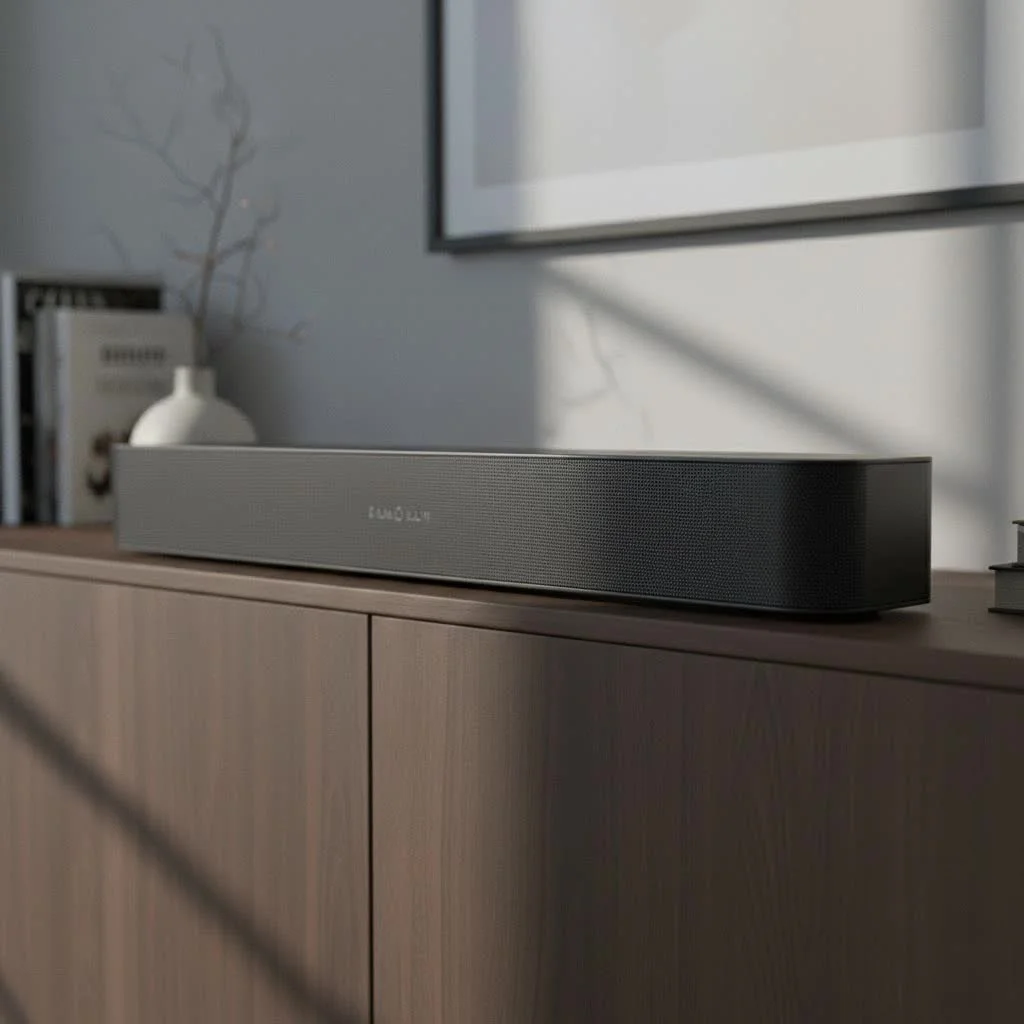
At Mxwar.com, with over 15 years of hands-on experience in the audio world, we’ve witnessed the evolution of sound technology firsthand. We understand that enhancing your home audio doesn’t have to be complicated. A sound bar, designed specifically to improve your TV’s sound, can be the cornerstone of an impressive home theatre system, delivering clarity, depth, and excitement that built-in speakers can only dream of. For explore our home theater reviews on this site.
What Exactly is a Sound Bar Home Theatre?
At its core, a sound bar is a slim, elongated speaker unit that typically sits beneath your TV or can be mounted on the wall. Think of it as an audio powerhouse neatly packaged into a single, discreet device. Inside this compact enclosure, you’ll find an array of individual speaker drivers—tweeters for crisp highs, mid-range drivers for clear dialogue, and woofers for impactful bass—all working in harmony to produce a far superior sound than your TV alone. Many modern sound bars also come with a separate, often wireless, subwoofer to deliver those deep, rumbling low frequencies that are essential for movies and music.
So, how does this single bar create a “home theatre” feel? Sound bars achieve this immersive experience by consolidating multiple audio components and utilizing advanced digital signal processing. This technology works to widen the soundstage, making it feel like sound is coming from a much larger area than just the bar itself. Some high-end sound bars even incorporate spatial audio technologies like Dolby Atmos, which bounce sound off your ceiling and walls to create a three-dimensional sound environment, making you feel as if you’re truly at the center of the action. Imagine hearing a helicopter fly overhead or raindrops falling all around you – that’s the magic of a well-implemented sound bar home theatre.
Sound Bar vs. Traditional Home Theatre: Which is Right for You?
The choice between a sound bar and a traditional, multi-speaker home theatre system often comes down to a balance of performance, space, and simplicity. Both have their merits, and understanding these differences is key to making the best decision for your home.
Sound Bar Advantages: Simplicity Meets Performance
|
Our Picks for the Best Sound Bar in 2026
As an Amazon Associate I earn from qualifying purchases.
|
||
| Num | Product | Action |
|---|---|---|
| 1 | Sonos Beam Gen 2 - Black - Soundbar with Dolby Atmos |

|
| 2 | Sound Bar for Smart TV, 80W Soundbar with Bluetooth/ARC/Opt/AUX Connect, Auto Volume Boost, 3 Equalizer Modes, 2 in 1 Detachable Soundbar for TV/PC/Gaming/Projectors |
|
| 3 | Sound Bar for Smart TV, 80W Soundbar with Bluetooth/ARC/Opt/AUX Connect, Dynamic Volume Boost, 3 Equalizer Modes, 2 in 1 Detachable Soundbar for TV/PC/Gaming/Projectors |
|
| 4 | Sony S100F 2.0ch Soundbar with Bass Reflex Speaker, Integrated Tweeter and Bluetooth, (HTS100F), easy setup, compact, home office use with clear sound black |
|
| 5 | Sonos Beam Gen 2 - White - Soundbar with Dolby Atmos |
|
| 6 | ULTIMEA 5.1CH Surround Sound Bar with Subwoofer, Dolby Atmos, VoiceMX, BassMX, APP, 300W Soundbar for Smart TV, Home Theater Surround Sound System for TV, BT 5.4, Poseidon M60 (2025 Model) |
|
| 7 | Samsung HW-C450 2.1ch Soundbar w/DTS Virtual X, Subwoofer Included, Bass Boost, Adaptive Sound Lite, Game Mode, Bluetooth, Wireless Surround Sound Compatible |
|
| 8 | VIZIO V-Series 2.0 Compact Sound Bar with Dolby Audio, DTS:X, Bluetooth V20x-J8 |
|
| 9 | MZEIBO Sound Bar with Subwoofer,120W Soundbar for Smart TV Surround Sound Home Theater System Bluetooth 5.3 Audio Compatible with ARC, AUX, Optical |
|
| 10 | Sound Bar for Smart TV, 80W Soundbar with Bluetooth/ARC/Opt/AUX Connect, Auto Volume Boost, 3 Equalizer Modes, 2 in 1 Detachable Soundbar for TV/PC/Gaming/Projectors |
|
- Space-Saving & Sleek Design: Sound bars are inherently compact. They fit seamlessly into almost any living space, perfect for minimalist aesthetics or smaller apartments where bulky speakers and wires aren’t practical.
- Simplified Setup: One of the biggest draws is the ease of installation. Most sound bars are “plug and play,” requiring minimal wiring, often just a single HDMI cable to connect to your TV.
- Significant Audio Upgrade: Even a basic sound bar offers a dramatic improvement over your TV’s built-in speakers, delivering clearer dialogue, richer music, and more impactful effects.
- Affordability: Generally, sound bars offer an excellent price-to-performance ratio, making an immersive home audio experience accessible without breaking the bank.
- Modern Features: Many sound bars come packed with smart features like Wi-Fi connectivity for multi-room audio, Bluetooth for music streaming from your phone, and even built-in voice assistants. They can also often be expanded by adding optional wireless rear speakers and subwoofers later on, if you decide you want more dedicated surround sound.
Traditional Home Theatre System Advantages: The Uncompromised Experience
- True Surround Sound: A traditional system with an AV receiver and multiple, strategically placed speakers (front, center, rear, and subwoofer) delivers the most authentic and precise surround sound. This setup creates a dedicated soundstage where every audio detail has its specific place.
- Superior Immersion: For large, dedicated home cinema rooms, a multi-speaker system can truly envelop you in sound, offering an unparalleled cinematic experience.
- High Fidelity at All Volumes: With larger drivers and more dedicated amplification, traditional systems typically handle extreme volumes with less distortion, maintaining clarity and dynamic range.
- Customization: These systems offer extensive customization options, allowing audiophiles to fine-tune every aspect of their sound.
When to Choose a Sound Bar
If you live in a small to medium-sized room, prioritize a clean aesthetic, prefer a simple setup, or are working with a tighter budget, a sound bar is an outstanding choice for creating a compelling home theatre experience. It offers a fantastic audio upgrade without the complexity and space commitment of a full system.
When to Choose a Traditional System
For those with a dedicated home cinema room, no budget or space constraints, and an unwavering pursuit of the absolute best audio fidelity and customization, a traditional multi-speaker system remains the pinnacle.
Unlocking the Benefits: Why a Sound Bar is a Smart Home Theatre Choice
Adopting a sound bar for your home theatre setup brings a host of compelling advantages that go beyond simply making things louder.
Crisp Dialogue & Dynamic Soundscapes
One of the most immediate and noticeable improvements is the clarity of dialogue. No more straining to hear conversations over background music or action sequences. Sound bars are specifically engineered to make voices stand out, ensuring you catch every whispered line. Beyond dialogue, they create a much wider and more dynamic soundstage, transforming flat TV audio into an engaging, room-filling experience for movies, sports, and your favorite shows.
Streamlined Setup & Minimal Clutter
Say goodbye to tangled wires and multiple bulky speakers. A sound bar simplifies your entertainment area. With just one main unit and often a wireless subwoofer, you achieve a significantly cleaner look. Most modern sound bars connect to your TV via a single HDMI ARC (Audio Return Channel) or eARC cable, which also allows you to control the sound bar’s volume with your TV remote, streamlining your overall experience.
Advanced Audio Technologies
Many mid-range to high-end sound bars now support cutting-edge audio formats like Dolby Atmos and DTS:X. These technologies create a truly three-dimensional sound experience, adding height and depth that makes you feel like sound is coming from all around you, including above. This isn’t just about loudness; it’s about putting you inside the story.
Versatility Beyond Movies
Your sound bar isn’t just for movie nights. With Bluetooth and Wi-Fi connectivity becoming standard, it doubles as a powerful speaker for streaming music, podcasts, and audiobooks with far greater fidelity than your TV could ever offer. Many also integrate with smart home ecosystems and voice assistants for a truly connected experience.
Scalability and Future-Proofing
While a sound bar delivers fantastic sound on its own, many models offer the flexibility to expand. You can often add a wireless subwoofer for deeper bass or integrate wireless rear speakers to achieve a more discrete, enveloping surround sound experience later on, allowing your home theatre to evolve with your needs.
Setting Up Your Sound Bar Home Theatre: A Step-by-Step Guide
Getting your sound bar home theatre up and running is typically a straightforward process, but knowing the best connection methods and settings can make all the difference.
1. Connection Options: Choosing Your Path to Great Sound
- HDMI ARC/eARC (Recommended): This is the gold standard for connecting modern sound bars to modern TVs. HDMI ARC (Audio Return Channel) allows audio to travel both to and from your TV using a single HDMI cable, simplifying wiring and enabling control of the sound bar with your TV remote. HDMI eARC (Enhanced Audio Return Channel) is an even better version, offering higher bandwidth to support uncompressed, high-bitrate audio formats like Dolby Atmos. Always use the HDMI port labeled “ARC” or “eARC” on both your TV and sound bar.
- Optical Digital Audio: If your TV doesn’t have an HDMI ARC/eARC port, an optical digital audio cable is your next best option. It provides excellent digital audio quality but doesn’t support advanced formats like Dolby Atmos and won’t allow single-remote control.
2. Key Setup Steps: Get Ready for Immersive Sound
- Connect Your Sound Bar:
- For HDMI ARC/eARC: Plug one end of a high-quality HDMI cable (version 1.4 or higher for ARC, 2.1 for eARC) into the ARC/eARC port on your TV and the other end into the corresponding port on your sound bar.
- For Optical: Connect the optical cable from your TV’s “Digital Audio Out (Optical)” port to the “Optical In” port on your sound bar.
- Disable TV Speakers: Navigate to your TV’s audio settings menu and turn off the built-in speakers. Select “External Speaker” or your sound bar as the audio output. This prevents audio echoes and ensures all sound comes from your sound bar.
- Adjust TV Audio Output (if necessary): In your TV’s audio settings, look for “Digital Audio Output Format.” For optical connections, you might need to select “PCM” if you encounter issues, as some sound bars may not decode certain digital surround formats via optical. For HDMI eARC, you’ll generally want to select “Bitstream” or “Passthrough” to allow the sound bar to handle advanced audio decoding.
- Position Your Subwoofer (if wireless): If your sound bar came with a wireless subwoofer, plug it into a power outlet. Most wireless subwoofers pair automatically with the sound bar. Experiment with its placement in the room—corners can often boost bass, but the “subwoofer crawl” method (placing the sub in your listening position and crawling around the room to find where it sounds best) is ideal.
- Utilize Sound Bar Settings: Many sound bars offer their own settings for EQ, sound modes (movie, music, game), and even room correction technology. Take some time to explore these options through the sound bar’s remote or companion app to optimize the sound for your specific room and content.
Choosing the Perfect Sound Bar for Your Home Theatre
With a plethora of options available, selecting the right sound bar can feel daunting. Here’s what my 15 years in the audio field have taught me to consider:
- Consider Your Room Size: Just like choosing speakers for a traditional system, the size of your room dictates the power you need. A small sound bar might get lost in a large living room, while an overly powerful one could overwhelm a cozy den. Match the sound bar’s output to your room’s dimensions.
- TV Size Compatibility: A good rule of thumb is to choose a sound bar that isn’t significantly narrower than your TV. Visually, it looks better, and acoustically, a wider sound bar can create a more expansive soundstage. Sound bars designed for TVs over 55 inches often come with more advanced driver arrays.
- Connectivity Options: Always prioritize HDMI eARC if your TV supports it. It’s the most capable connection for future-proofing and ensures the highest quality audio transmission, especially for Dolby Atmos.
- Channels and Dolby Atmos: Look for sound bars that specify their channel configuration (e.g., 3.1.2, 5.1.4). The last number indicates upward-firing speakers for height effects, crucial for true Dolby Atmos immersion. More channels generally mean a more convincing surround experience. [cite: 5 (search result snippets)]
- Brand Reputation & Longevity: Investing in a reputable brand often means better build quality, reliable performance, and ongoing software updates that can enhance features and even improve sound quality over time.
Expert Insight: The Mxwar Edge
“The shift towards sound bars for home theatre isn’t just about convenience; it’s about smart engineering meeting modern living. I’ve seen these compact units evolve from simple TV enhancers to sophisticated audio hubs capable of delivering truly breathtaking, multi-dimensional soundscapes. The key is understanding that a sound bar isn’t a compromise, but a deliberate choice for immersive audio that respects your space and simplifies your setup.” – Jonathan “Jono” Vance, Lead Audio Engineer at Mxwar.com
Frequently Asked Questions
Q: Can a sound bar truly replicate a home theatre system?
A: While no single sound bar can perfectly replicate the discrete channel separation and pinpoint accuracy of a meticulously placed, multi-speaker home theatre system, many modern sound bars, especially those with upward-firing speakers and optional wireless surrounds, come remarkably close to delivering a highly immersive, cinematic experience that vastly outperforms built-in TV speakers.
Q: Is HDMI eARC essential for a sound bar home theatre?
A: For the best possible performance, especially if you want to enjoy uncompressed, high-resolution audio formats like Dolby Atmos and DTS:X, HDMI eARC is highly recommended. It offers the bandwidth needed for these advanced audio streams and simplifies control with a single cable. However, a sound bar connected via optical or standard HDMI ARC will still provide a significant audio upgrade.
Q: How do sound bars create surround sound without multiple speakers?
A: Sound bars employ sophisticated digital signal processing and precisely angled drivers to bounce sound off your walls and ceiling. This creates a virtual surround sound effect, tricking your ears into perceiving sound coming from different directions, including above and behind you, even though all the speakers are in front.
Q: What’s the ideal placement for a sound bar?
A: The best placement is typically directly below your TV, either on a stand or mounted to the wall, centered with the screen. This ensures the audio originates from the same visual plane as the action, maintaining a cohesive experience. Ensure there are no obstructions in front of the sound bar, especially if it has upward-firing speakers.
Q: Can I add more speakers to my sound bar later?
A: Yes, many sound bar systems are modular and expandable. You can often purchase additional wireless subwoofers and satellite rear speakers from the same manufacturer to enhance your surround sound experience without the need for extensive wiring.
Conclusion
The journey to an incredible home theatre experience no longer demands a dedicated room full of intricate wiring and multiple speakers. With a high-quality sound bar, you can transform your living space into an immersive entertainment hub, enjoying crisp dialogue, dynamic action, and rich musical scores with remarkable ease and elegance. By understanding the capabilities, benefits, and setup nuances of a sound bar home theatre, you’re empowered to make an informed choice that elevates every moment you spend in front of your screen. So go ahead, choose the right sound bar, set it up, and prepare to be truly captivated by your home entertainment like never before. Welcome to the Mxwar experience—where superior sound is always within reach!
Get our weekly buyer guide
Practical specs, not advice. Unsubscribe anytime.

I got a mid-range soundbar based on the recommendations for enhancing home audio. While the sound quality is definitely an improvement over my TV’s speakers, I found the setup a bit more complicated than I expected. It took me a while to get the subwoofer to connect properly, which was a bit frustrating.
I was hesitant to get a soundbar, thinking it would be just another gadget, but I’m glad I did. My 4K TV looks amazing, but the sound was always a letdown. This soundbar totally fixed that. The immersive audio is fantastic for gaming, though I wish it had one more HDMI input.
This soundbar is a game-changer for my living room. I’ve always wanted a better audio setup but didn’t want the clutter of a traditional multi-speaker system. This solution is so elegant and powerful. The bass is surprisingly deep, and the overall soundstage is much wider than I anticipated. Highly recommend for anyone looking to transform their viewing.
I finally upgraded my old TV’s audio with a soundbar after reading about how much better they are than built-in speakers. The difference is night and day! I used to struggle to hear dialogue, but now everything is crystal clear. It really does make movie nights feel like a true home theatre experience without all the wires.